The best santoku knives pair a blade and handle that suit your everyday slicing, dicing, and chopping. These seven options range from compact, sheath-equipped designs to forged 7-inch knives, so choose by grip, food release, and care needs.
Quick Top Products
imarku 7-Inch 10Cr15CoMoV Santoku
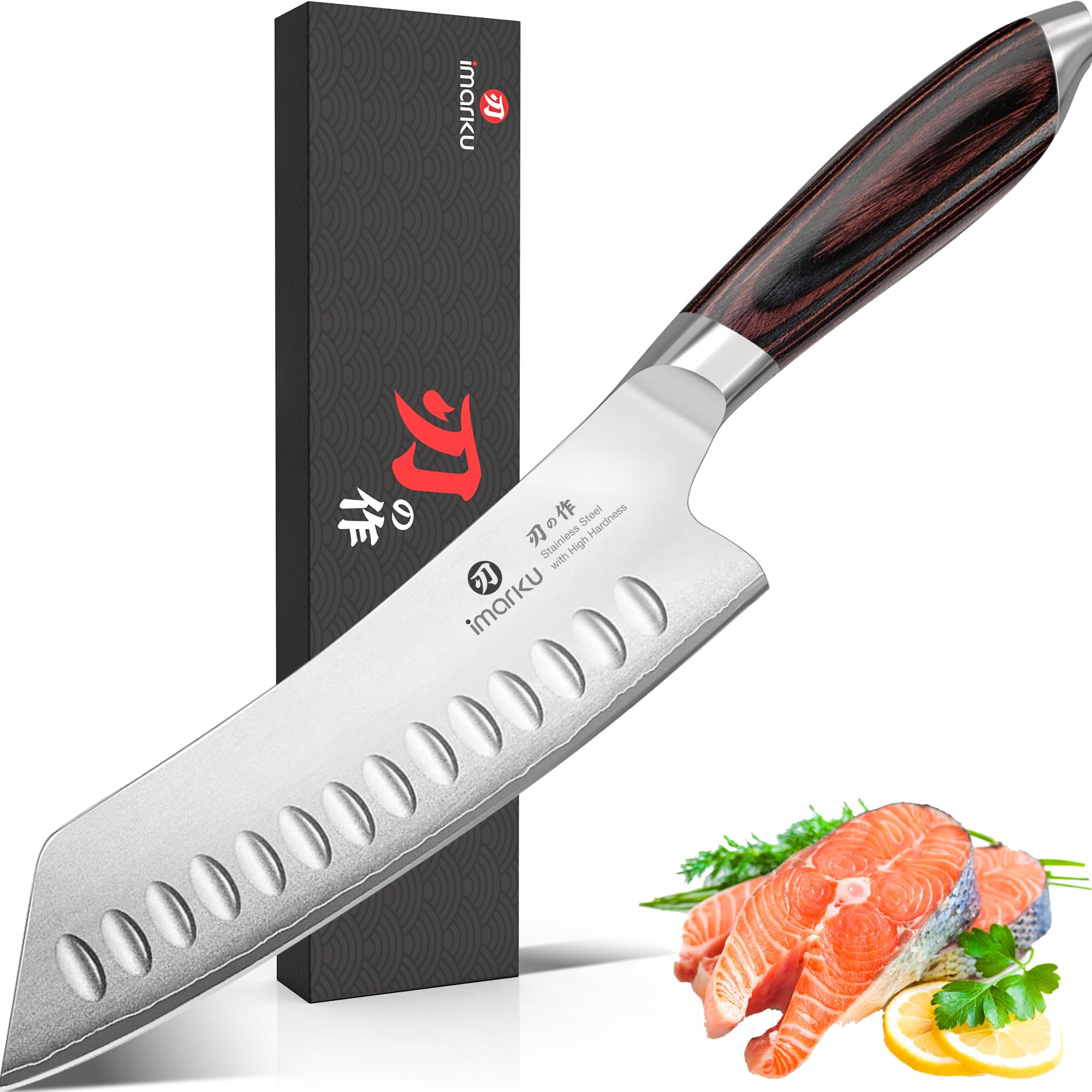
- The 7-inch blade has a 10Cr15CoMoV core with stainless steel cladding.
- Hollow-edge dimples help reduce sticking with moist or starchy foods.
- The raised Pakkawood handle is shaped for knuckle clearance.
Best For: Home cooks who want a 7-inch knife with clad steel and dimples to help food release.

KEEMAKE 7-Inch Santoku
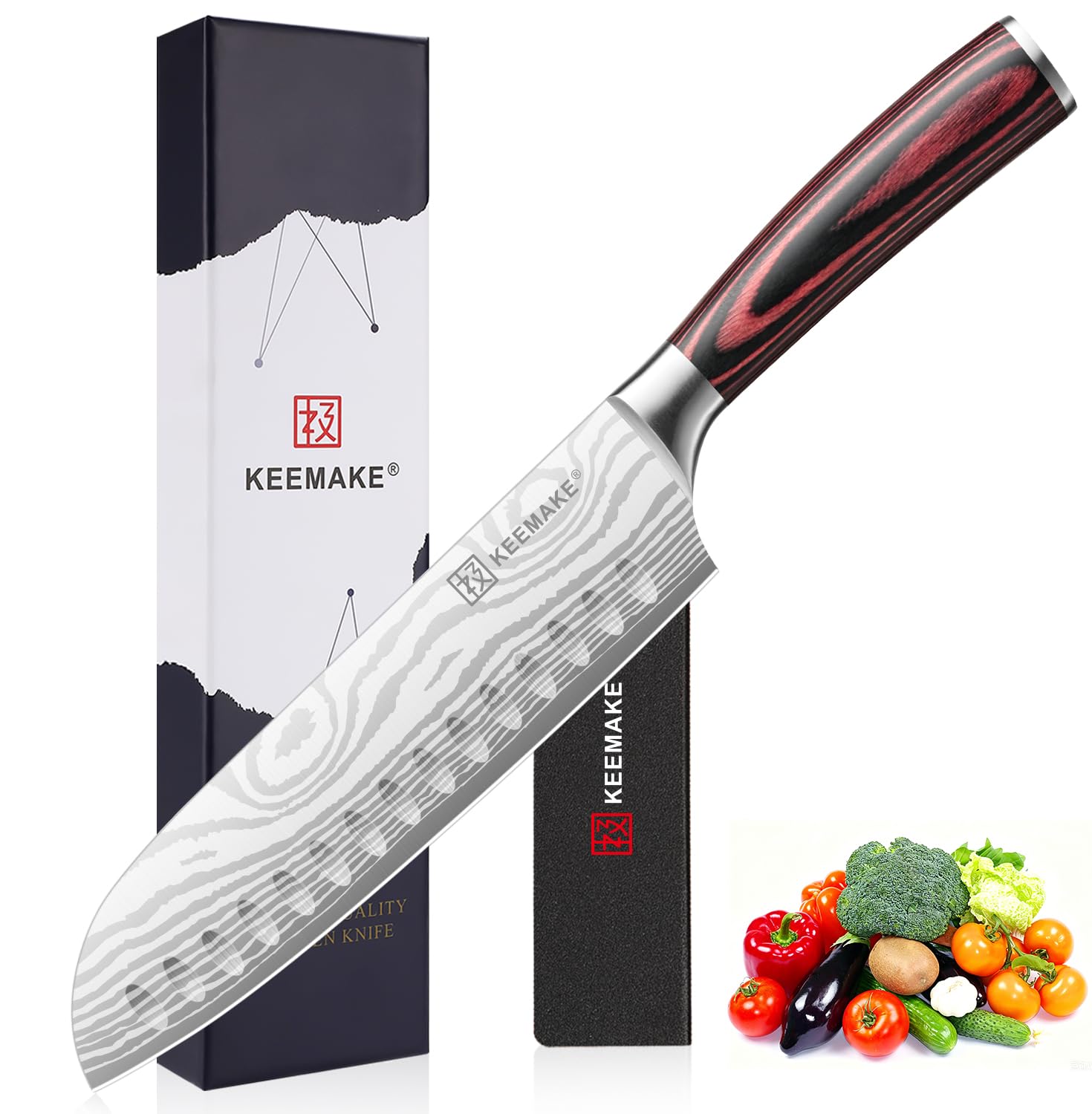
- The forged 7-inch knife weighs 8.16 oz.
- Its wave-patterned blade is intended to reduce food sticking.
- The flatter edge supports push cuts, with limited rocking at the tip.
Best For: Cooks who want a lighter santoku for nimble everyday chopping and push cuts.
Zyliss Comfort 5.9-Inch Santoku
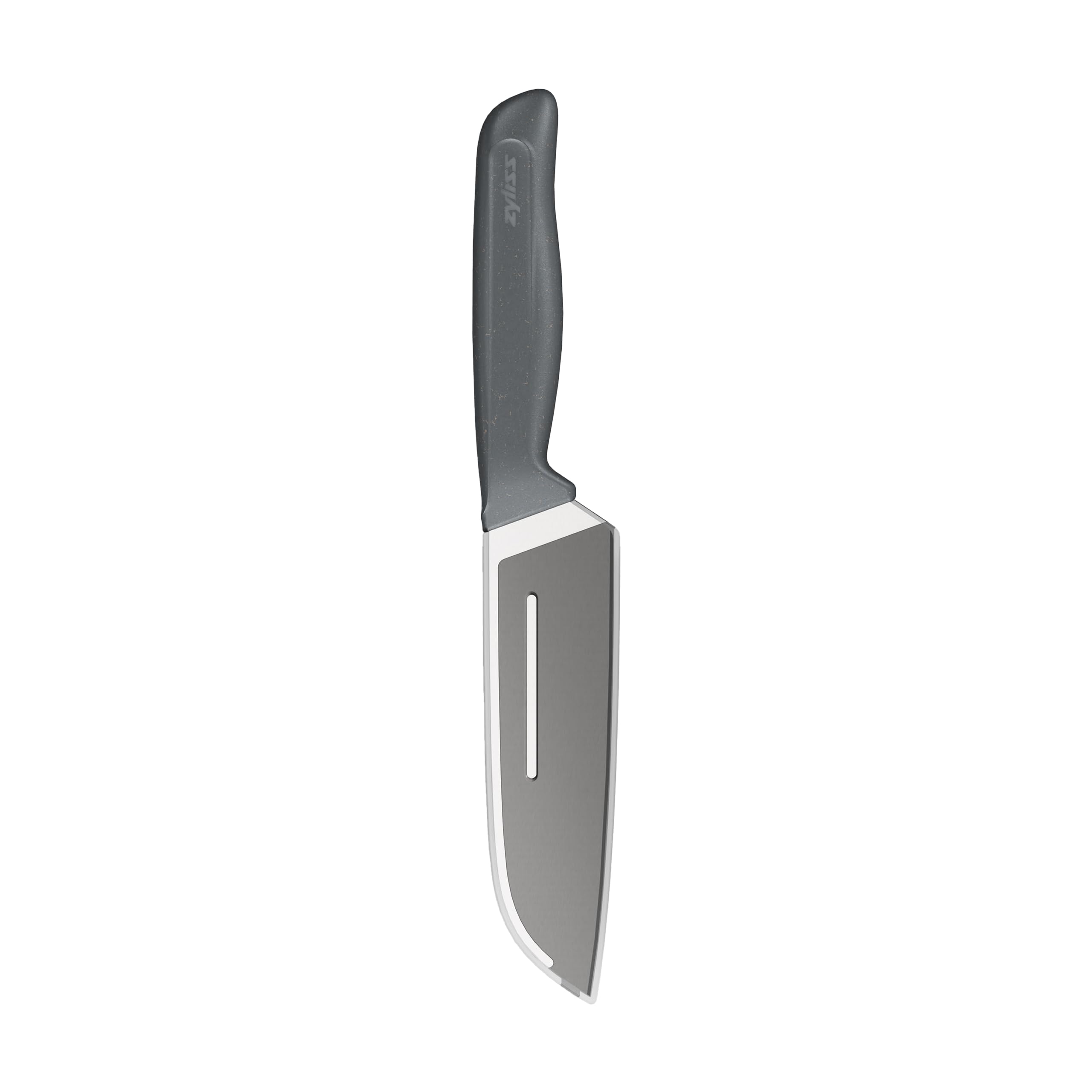
- The santoku blade measures 5.9 inches.
- A protective sheath is included for storage or camping.
- The contoured, non-slip handle is designed for wet-hand control.
Best For: Cooks who prefer a shorter santoku and want a blade guard for storage or camping.
imarku 7-Inch High-Carbon Santoku
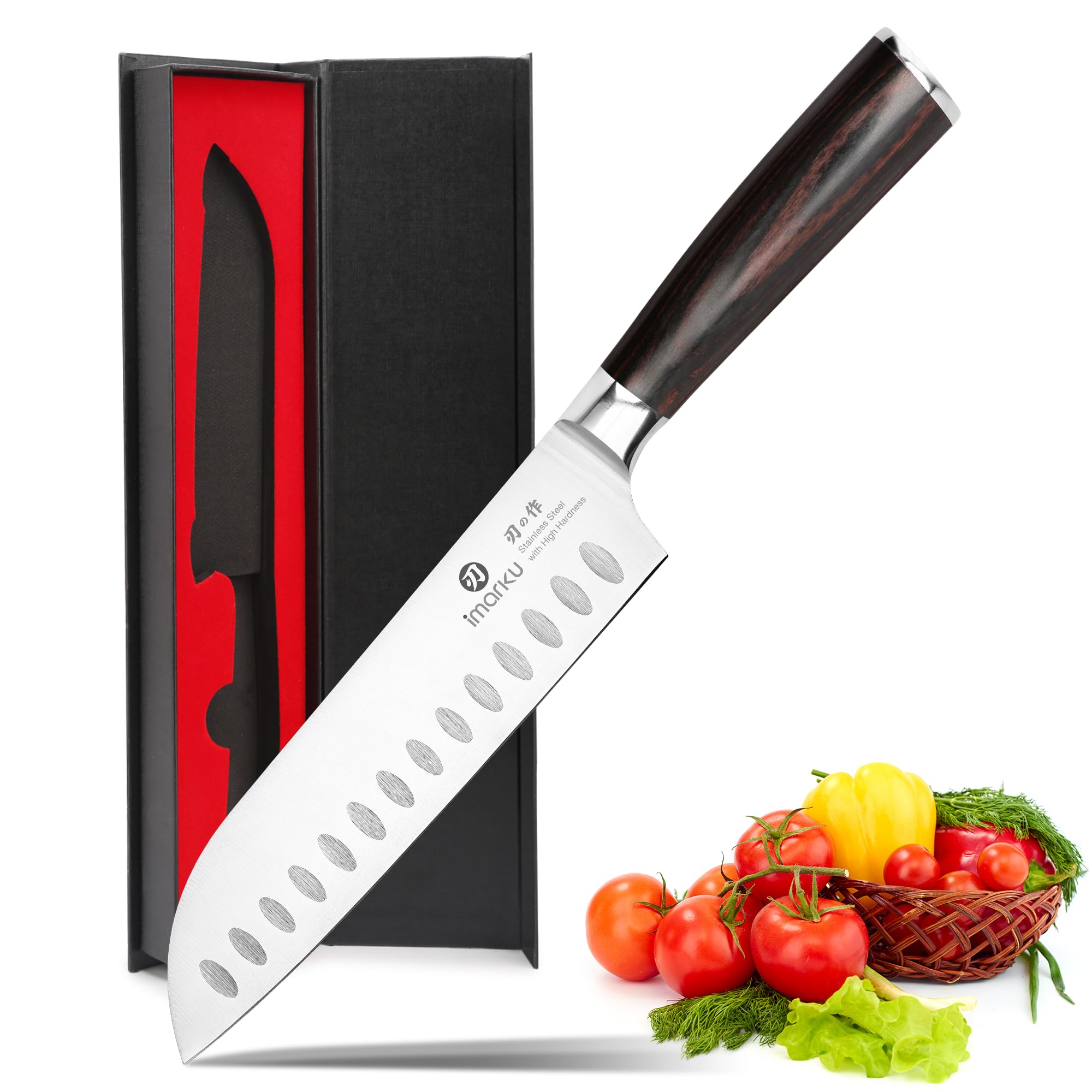
- The 7-inch blade has a hollow edge to help limit sticking.
- Its hand-polished edge is 15–18° per side.
- The Pakkawood handle is shaped for a secure, comfortable grip.
Best For: Home cooks seeking a 7-inch high-carbon stainless santoku with a hollow edge.
imarku 7-Inch Powder Steel Santoku
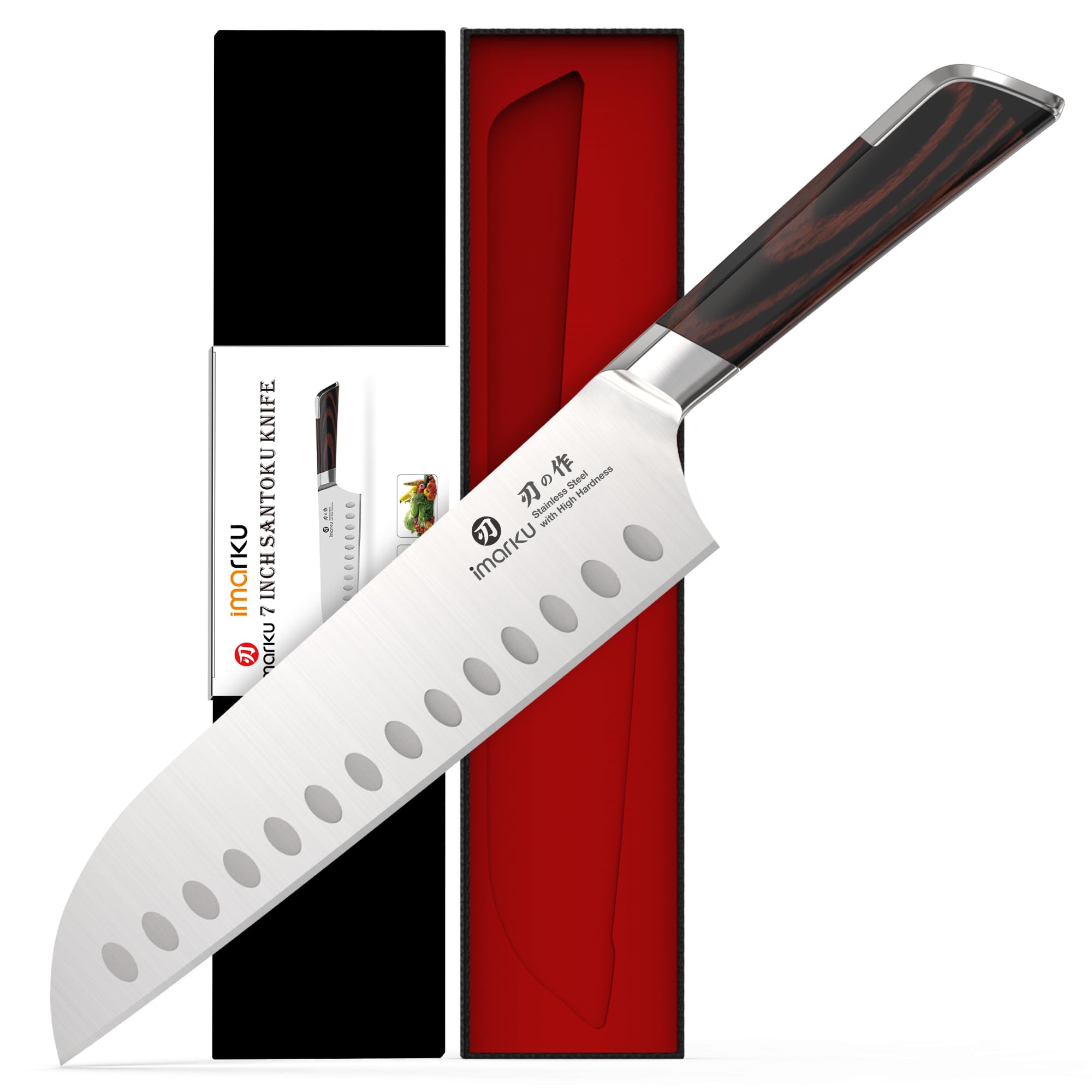
- The 7-inch blade uses a powder steel core in a multi-layer forged construction.
- The blade is rated at 62±1 HRC.
- The handle has a diamond-profile contour for grip.
Best For: Experienced home cooks drawn to a forged powder steel blade and balanced handle design.
imarku 7-Inch Santoku, Sand-Grind Finish
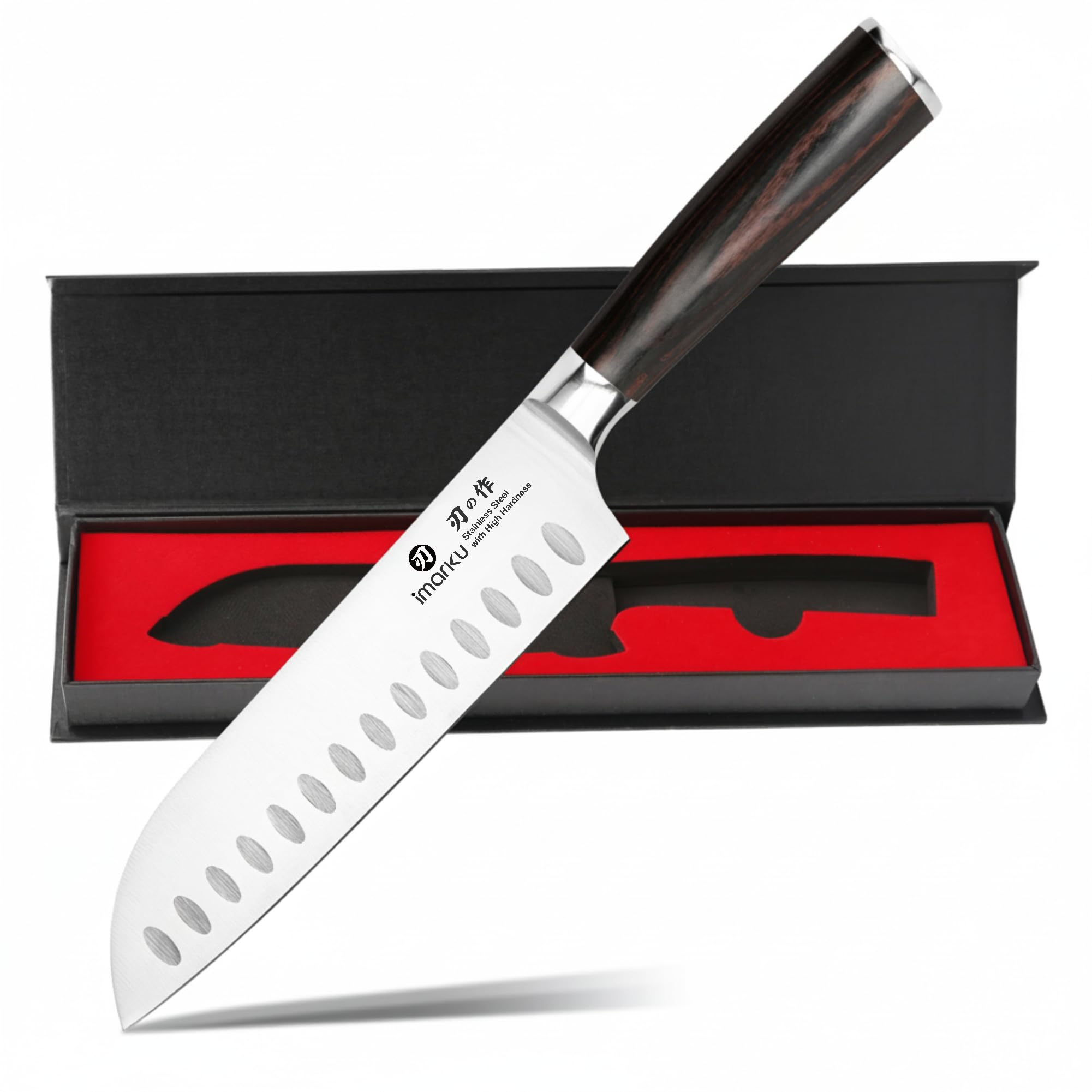
- It weighs 190 g for a lighter feel during quick tasks.
- The hollow blade design is intended to minimize sticking.
- The ergonomic Pakkawood handle is designed to fit naturally in hand.
Best For: Cooks wanting a light 7-inch santoku with a Pakkawood handle and hollow blade.
imarku 7-Inch Santoku, Orange Handle
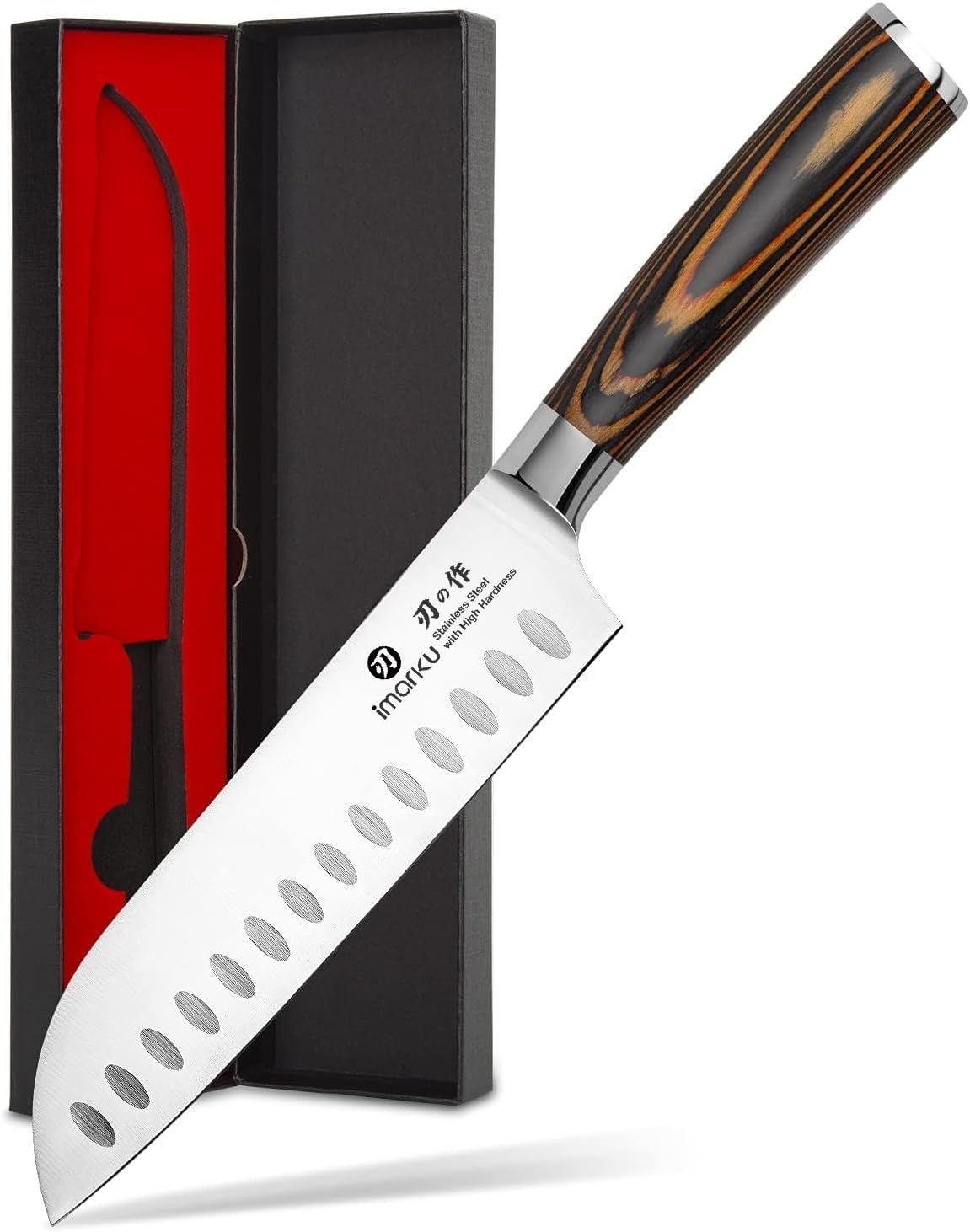
- The blade is 7 inches and has hollow ovals on both sides.
- The orange Pakkawood handle is ergonomically designed.
- The hand-polished edge is 15–18° per side.
Best For: Cooks looking for an orange-handled santoku with hollow-edge blade design.
Clad Steel for Everyday Prep
imarku Japanese Santoku Knife 7 Inch, 10Cr15CoMoV 3-Layer Stainless Steel
This imarku santoku combines a 7-inch blade with a 10Cr15CoMoV high-carbon stainless steel core and protective stainless cladding. Its hollow-edge dimples help reduce drag with moist or starchy ingredients, while the raised Pakkawood handle provides knuckle clearance at the board.
The knife is intended for slicing, dicing, and mincing vegetables, boneless meat, and fish. The edge is honed to 12±2° per side and the blade is rated at 59±2 HRC.
Check whether you prefer a lighter, simpler blade profile or want the cladding, dimples, and raised handle details this design brings together.
Best For: Home cooks who want a 7-inch knife with clad steel and dimples to help food release.
| Pros | Cons |
|---|---|
|
|
Choose this model if you want a mid-sized santoku with cladding, a dimpled blade face, and a raised handle. Those details target food release and hand clearance during regular board work.
Its 59±2 HRC hardness and 12±2° edge angle are stated specifications, but they do not establish how the knife will feel in your grip. Check the handle fit and care instructions before buying, especially if you need a dishwasher-safe knife or storage guard.
Lightweight 7-Inch Control
KEEMAKE 7" Santoku Knife, Razor Sharp Chef Knife with Ergonomic Handle
The KEEMAKE is a forged 7-inch santoku weighing 8.16 oz, with a Pakkawood handle and a wave-patterned blade intended to reduce food sticking. Its flatter edge supports push cutting and board contact, while the tip allows limited rocking for herbs and garlic.
The listed steel is 1.4116 high-carbon stainless, hardened to 58 HRC, with a hand-sharpened 12–15° edge per side. It is designed for produce, fish, poultry, and boneless meat.
The blade shape and modest weight may suit cooks who prefer agile handling; consider whether its limited rocking action matches your usual cutting style.
Best For: Cooks who want a lighter santoku for nimble everyday chopping and push cuts.
| Pros | Cons |
|---|---|
|
|
Consider this knife if you favor a lighter feel and use push cuts for vegetables or boneless proteins. The 8.16 oz weight, flatter edge, and limited rocking action give a more specific handling profile than an all-purpose chef knife shape.
Its wave pattern is intended to reduce sticking, but does not remove the need to clear food from a blade. Before choosing, check whether the handle shape feels suitable and whether the care routine fits your kitchen.
Compact Blade With Guard
Zyliss Comfort Knife - Japanese Stainless Steel Blade - Non-Slip Contoured Handle for All Hand Sizes - Kitchen Tools with Safety Kitchen Blade Guards - Dishwasher Safe - 5.9" Santoku Knife
Zyliss pairs a 5.9-inch Japanese stainless steel santoku blade with a contoured, non-slip handle and a protective blade guard. The shorter blade may appeal if you prefer a more compact knife for board work or want a covered option for a drawer or camping kit.
Finger indents are intended to aid cutting technique, and the handle is designed for wet-hand control and different hand sizes. The title also identifies the knife as dishwasher safe.
Consider the compact length and your usual prep space before buying.
Best For: Cooks who prefer a shorter santoku and want a blade guard for storage or camping.
| Pros | Cons |
|---|---|
|
|
Choose the Zyliss if a shorter blade and included cover are priorities. The sheath is useful for covered storage, and the non-slip contoured handle is designed to stay controlled with wet hands.
Its 5.9-inch length gives it a compact profile for slicing. Check that the size suits your ingredients and that the finger indents fit your preferred grip.
Hollow Edge for Everyday Slicing
imarku Chef Knife 7 Inch Kitchen Knife Ultra Sharp Santoku Knife - High Carbon Japanese Chefs Knife, Kitchen Gadgets 2025, Apartment Essentials, Birthday Gifts for Him Her, Best Gifts for Women Men
This imarku santoku has a 7-inch high-carbon stainless steel blade with a hollow edge intended to reduce food sticking. Its hand-polished edge is 15–18° per side, and the blade is 2.5 mm thick.
The Pakkawood handle is shaped for a secure hold, while the knife is designed for chopping, slicing, dicing, and mincing meat, vegetables, fruit, and bread. A gift box is included.
This is a straightforward everyday profile with food-release hollows; check the precise steel grade and care instructions if those details matter to your choice.
Best For: Home cooks seeking a 7-inch high-carbon stainless santoku with a hollow edge.
| Pros | Cons |
|---|---|
|
|
This imarku fits cooks who want a familiar 7-inch length and hollow-edge construction for varied daily prep. Its specified thickness and edge angle provide more detail for shoppers comparing blade geometry, while the Pakkawood handle is intended to reduce wrist tension.
The notes do not identify a steel grade or dishwasher guidance. Check care requirements before buying, and consider whether you want a sheath or a particular blade steel specification.
Powder Steel and Forged Balance
imarku Japanese Santoku Knife 7 Inch, Ultra Sharp Chef Knife, Professional Grade Powder High Carbon Steel Forged Kitchen Knife, PakkaWood Ergonomic Handle, Gifts for Women and Men
This imarku is a forged 7-inch santoku made with a powder steel core and a PakkaWood handle. Its mirror-finished bolster is intended to balance the blade and handle, and the ergonomic handle has a diamond-profile contour for grip.
The product notes give an HRC of 62±1 and refer to initial sharpness up to 800 on the TCC scale. It is also described as stain- and corrosion-resistant.
These details make it a specification-rich option, though maintenance and sharpening needs are not given. Check those care details and make sure the handle shape suits your hand before choosing it for regular prep.
Best For: Experienced home cooks drawn to a forged powder steel blade and balanced handle design.
| Pros | Cons |
|---|---|
|
|
Choose this version if the powder steel core, forged construction, and stated hardness are the features you want to compare. The mirror-finished bolster and contoured handle also distinguish its grip design.
The available details do not explain sharpening intervals or cleaning instructions, so factor in those unknowns before purchase. Its higher stated hardness is a specification, not a guarantee of edge life; check whether you are comfortable maintaining this blade.
Lightweight Pakkawood Handle
imarku Santoku Knife 7 Inch Japanese High Carbon Stainless Steel Chef Knife | Japanese Style Sharp Kitchen Knife Sand Grinding Finish Effortless Prep Meats And Vegetables Best Gifts For Women And Men
This imarku santoku is a 7-inch Japanese-style knife with a hollow blade design intended to create air pockets and minimize sticking. It weighs 190 g and has an ergonomic Pakkawood handle.
The notes describe Japanese stainless steel with resistance to rust and corrosion, and an edge sharpness of 28+ degrees on each side, balancing sharpness and durability. It is presented for vegetable, fruit, and meat prep.
The relatively low weight is a clear point of difference for cooks who want a light-feeling knife. Check the exact blade steel grade and care instructions, which are not provided in the available details.
Best For: Cooks wanting a light 7-inch santoku with a Pakkawood handle and hollow blade.
| Pros | Cons |
|---|---|
|
|
This is a useful candidate if low weight and a Pakkawood handle matter more than a documented steel grade. The hollow blade aims to help with food release, and the stated 190 g weight gives a clear handling reference.
The edge-angle wording is unusual alongside the sharpness description, so verify the intended sharpening geometry before comparing it directly with knives that state a per-side edge angle. Also check care instructions and whether the length fits your preferred board work.
Colorful Handle With Food-Release Hollows
imarku Santoku Knife, 7 inch Kitchen Knife Ultra Sharp Cooking Knife Japanese Chef Knife -High Carbon Stainless Steel - Ergonomic Pakkawood Handle, Gifts for Women/Men, Orange
This 7-inch imarku santoku stands out for its orange Pakkawood handle and hollow oval features on both sides of the blade. The high-carbon German stainless steel is described as resistant to rust, corrosion, and discoloration.
Its hand-polished edge is 15–18° per side, and the knife is intended for chopping, slicing, dicing, and mincing. The hollows are designed to help vegetables and meat release more easily.
It shares several specifications and design details with another imarku in this roundup, so choose this offer for the orange handle preference rather than a different blade function. Confirm the color and care instructions before buying.
Best For: Cooks looking for an orange-handled santoku with hollow-edge blade design.
| Pros | Cons |
|---|---|
|
|
This option makes sense when handle color is an important kitchen or gift preference and you want the hollow-edge, 7-inch format. Its stated steel resistance and 15–18° edge angle match the everyday-prep orientation of another imarku candidate, so the functional difference is limited in the supplied details.
There is also conflicting color information in the product material. Check the selected offer’s handle color and care guidance before buying.
How to Choose Santoku Knives
How We Picked Best Santoku Knives
This selection focuses on individual santoku knives with a clearly identified blade length and practical details relevant to home prep. The choices cover familiar 7-inch blades, a shorter 5.9-inch option, hollow or dimpled faces intended to reduce sticking, and different handle shapes.
Steel construction and edge angles are included where specified. A paring knife with a conflicting catalog title was excluded because its detailed product facts identify it as a different knife type.
Comparing Santoku Knives for Home Prep
Blade length and geometry shape the main tradeoffs here. The Zyliss is the compact choice at 5.9 inches and comes with a sheath.
The 7-inch knives offer more reach; the KEEMAKE describes a flatter edge for push cuts and limited rocking, while several imarku options use hollows or dimples intended to help sliced food release.
| Product | Standout features | Best for |
|---|---|---|
| imarku 7-Inch 10Cr15CoMoV SantokuCheck Price |
| Home cooks who want a 7-inch knife with clad steel and dimples to help food release. |
| KEEMAKE 7-Inch SantokuCheck Price |
| Cooks who want a lighter santoku for nimble everyday chopping and push cuts. |
| Zyliss Comfort 5.9-Inch SantokuCheck Price |
| Cooks who prefer a shorter santoku and want a blade guard for storage or camping. |
| imarku 7-Inch High-Carbon SantokuCheck Price |
| Home cooks seeking a 7-inch high-carbon stainless santoku with a hollow edge. |
| imarku 7-Inch Powder Steel SantokuCheck Price |
| Experienced home cooks drawn to a forged powder steel blade and balanced handle design. |
| imarku 7-Inch Santoku, Sand-Grind FinishCheck Price |
| Cooks wanting a light 7-inch santoku with a Pakkawood handle and hollow blade. |
| imarku 7-Inch Santoku, Orange HandleCheck Price |
| Cooks looking for an orange-handled santoku with hollow-edge blade design. |
Steel, Edge, and Food Release
If steel details matter, compare what is actually identified: one imarku uses a 10Cr15CoMoV core with stainless cladding, KEEMAKE names 1.4116 steel, and another imarku gives a powder steel core and 62±1 HRC rating. Other options provide less exact steel-grade information.
Edge figures use different descriptions, so do not assume that an angle or hardness number alone predicts sharpening needs or edge life.
Hollow or dimpled blade faces can help reduce contact between moist ingredients and the blade, but their designs differ. The KEEMAKE uses a wave pattern, while the imarku models describe hollow edges, hollows, or air pockets.
Consider how often you prep potatoes, onions, or other foods that tend to cling, along with how easily you want to clear the blade during a busy meal.
Choosing a Santoku Handle and Length
A 7-inch blade is the dominant size in this selection, while the Zyliss 5.9-inch knife gives a shorter alternative. Think about board space, ingredient size, and whether you value longer slicing strokes or a more compact feel.
The Zyliss adds a sheath and identifies dishwasher-safe care in its title; care details are not provided for most of the other knives.
Handle details vary from raised knuckle clearance on the clad imarku to the KEEMAKE’s shaped Pakkawood grip and Zyliss’s contoured non-slip handle. The orange-handle imarku has conflicting color information, so confirm the selected version.
Grip shape is personal: consider finger placement and clearance at the board rather than choosing by material name alone.
Who Should Buy Which Santoku Knife
Choose the Zyliss for a shorter blade and included guard, or the KEEMAKE for a lighter 7-inch profile with a flatter push-cutting edge. The clad imarku suits buyers comparing a specified steel core, cladding, dimples, and raised handle.
The powder steel imarku is the option with a stated 62±1 HRC rating; buyers should check sharpening and care details. For a simple hollow-edge format, compare the two 7-inch imarku handles and confirm the color of the orange version before ordering.