The best chef knives balance blade length, grip, and cutting style for the way you cook at home. These picks span familiar all-purpose profiles, compact blades, and specialty designs, so consider your prep habits and preferred upkeep before choosing.
Quick Top Products
imarku Japanese Chef Knife 8 Inch
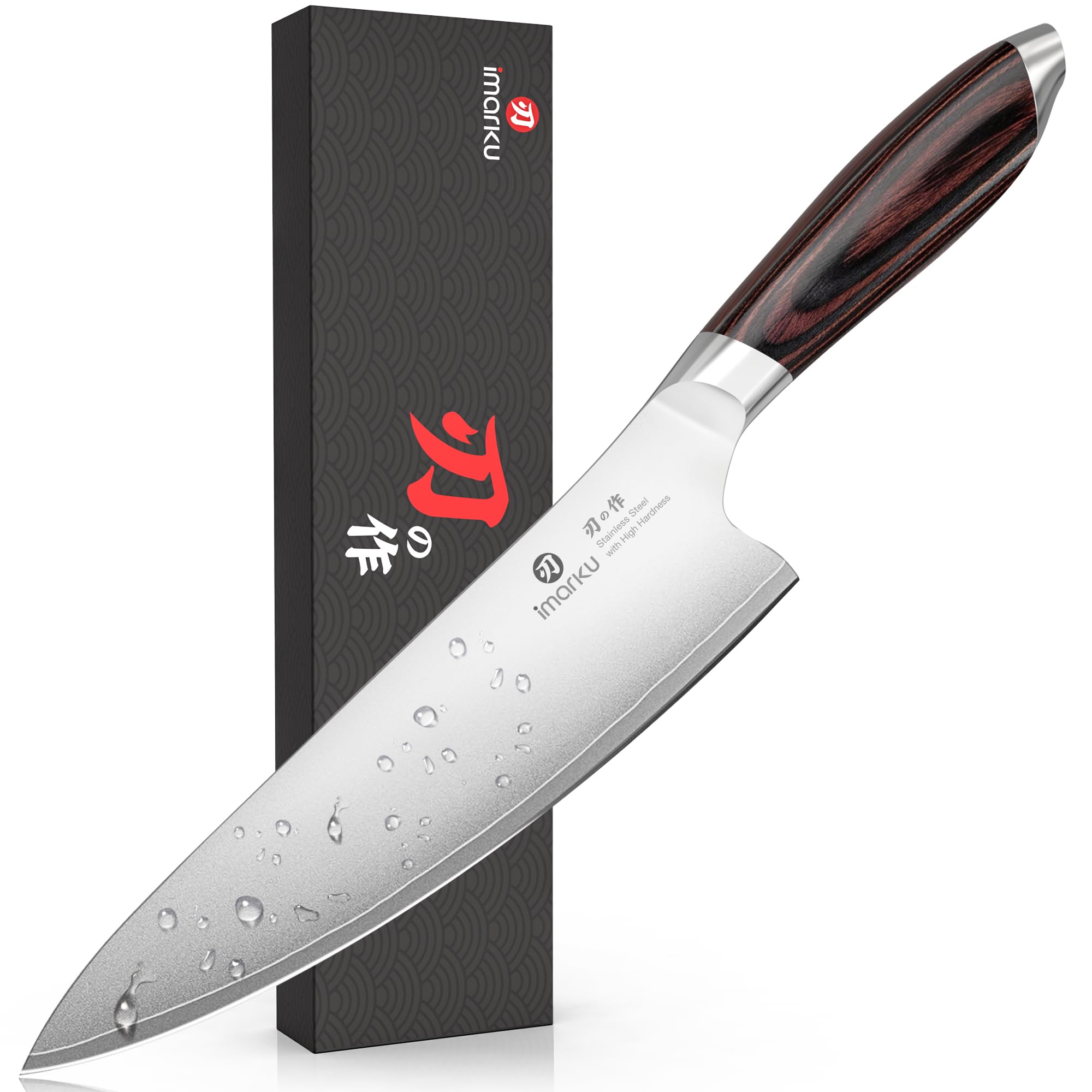
- Triple-layer clad steel blade with a double-bevel edge.
- Light 210g pakkawood handle design.
- Matte finish designed to help food slide off.
Best For: Home cooks who want a lighter all-purpose knife and a matte blade finish.

Messermeister Meridian Elite 8-Inch Chef’s Knife
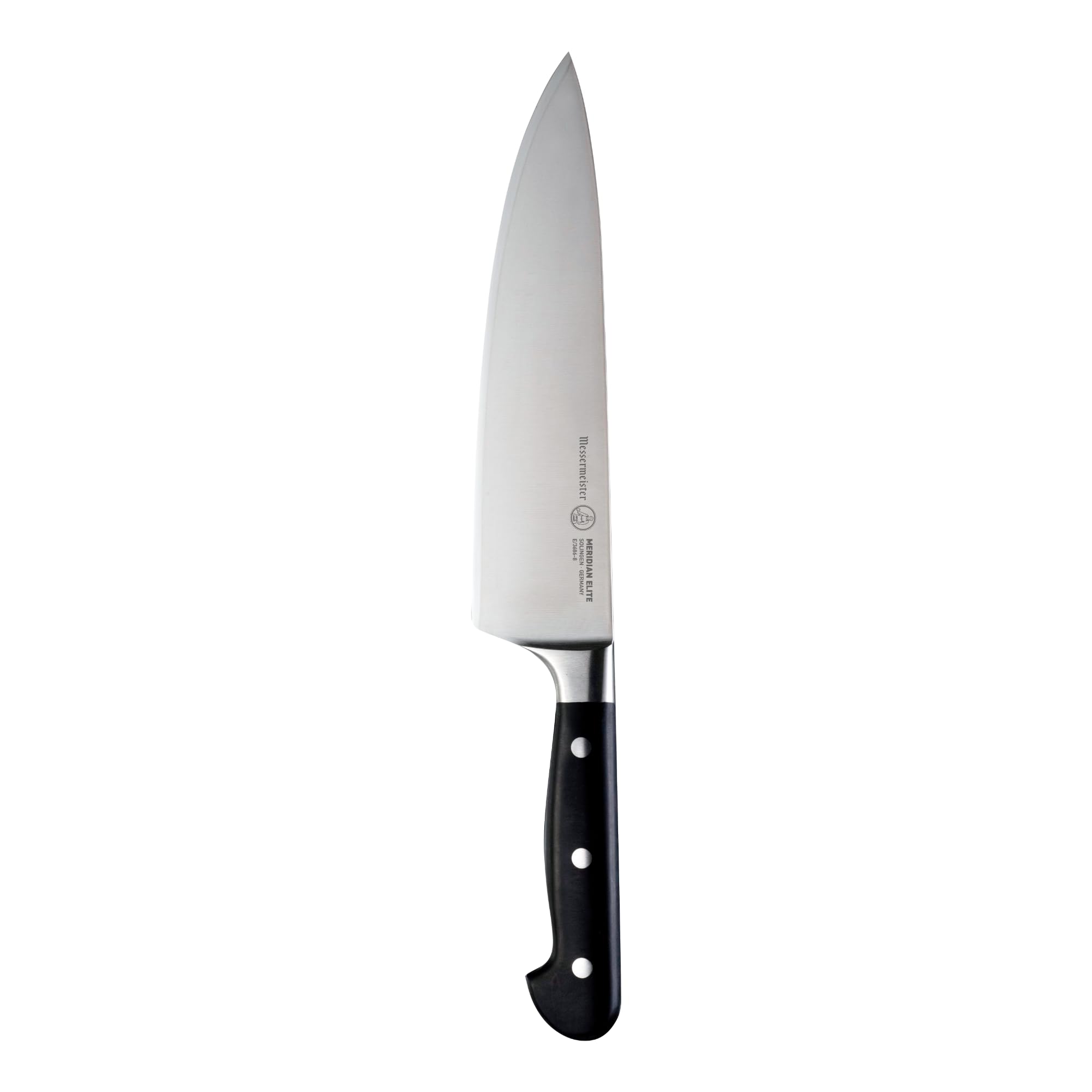
- Hot-drop forged construction with a triple-rivet, full-exposed tang.
- German 1.4116 steel alloy with a 15-degree blade edge.
- Heavy weight and handle balance are highlighted.
Best For: Cooks who prefer a heavier, forged German-style knife for regular chopping and slicing.
8-Inch Damascus Chef Knife With VG10 Steel
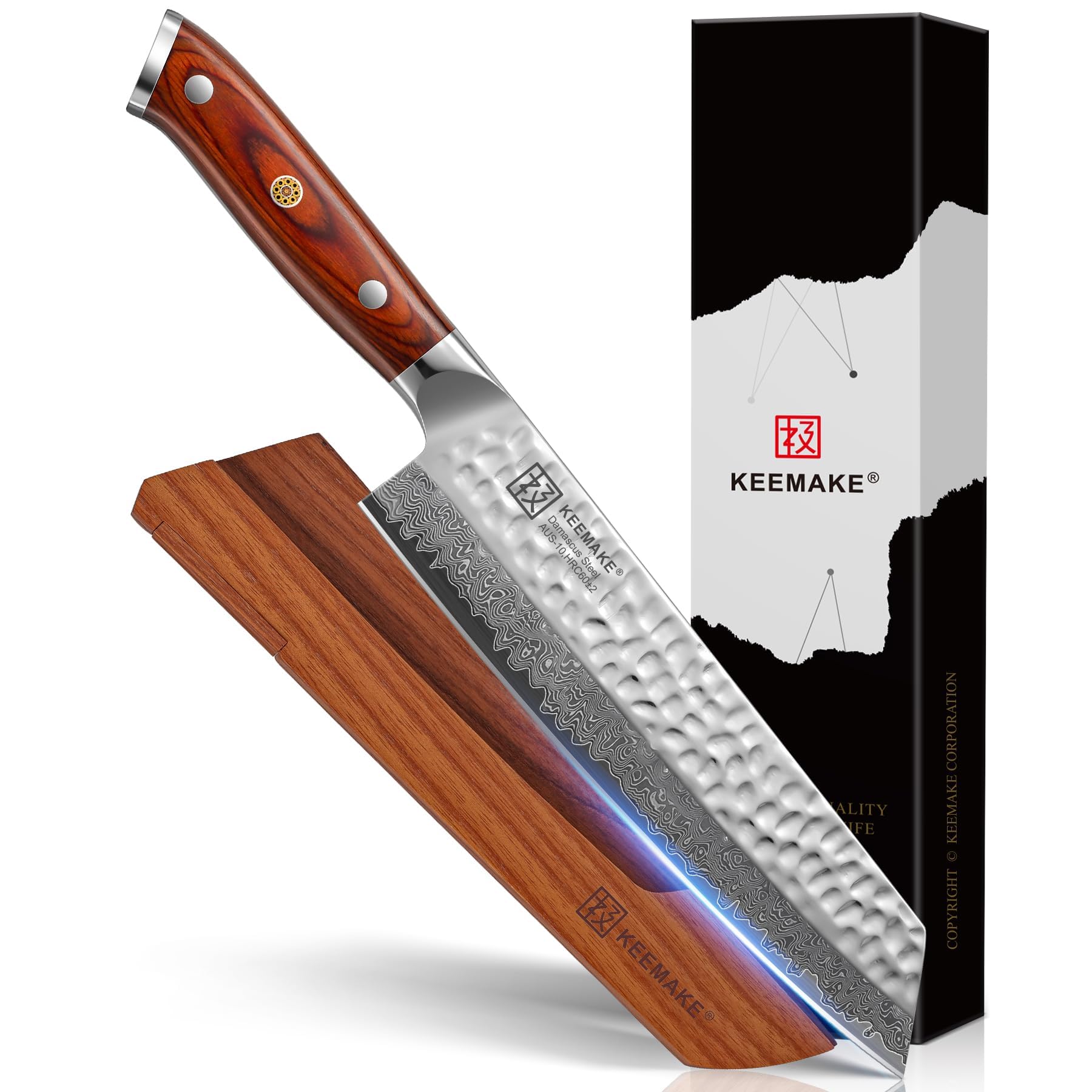
- VG10 core with a 67-layer hammered Damascus blade.
- An 8-inch knife with a 10-degree edge.
- Includes a fitted ash wood sheath that stands upright.
Best For: Cooks who want a Damascus-pattern blade and a sheath that stands upright for storage.
Messermeister Oliva Elite Stealth 8-Inch
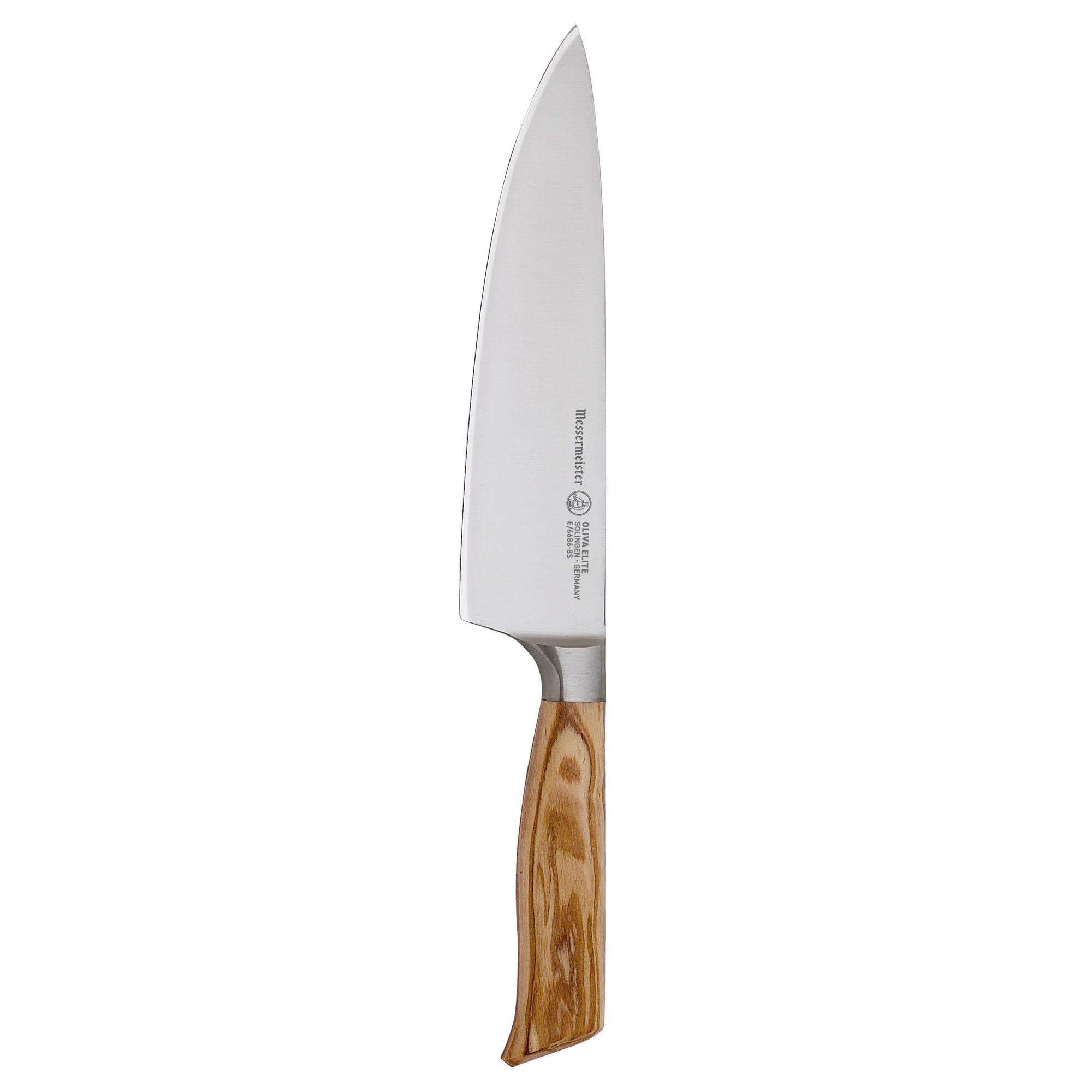
- 8-inch German 1.4116 steel blade with a 15-degree edge.
- Natural Mediterranean olive wood handle.
- About 25% thinner and 10% lighter than the traditional chef’s knife.
Best For: Cooks who want an 8-inch German-steel knife with an olive wood handle and a thinner profile.
imarku 8-Inch Hammered Japanese Chef Knife
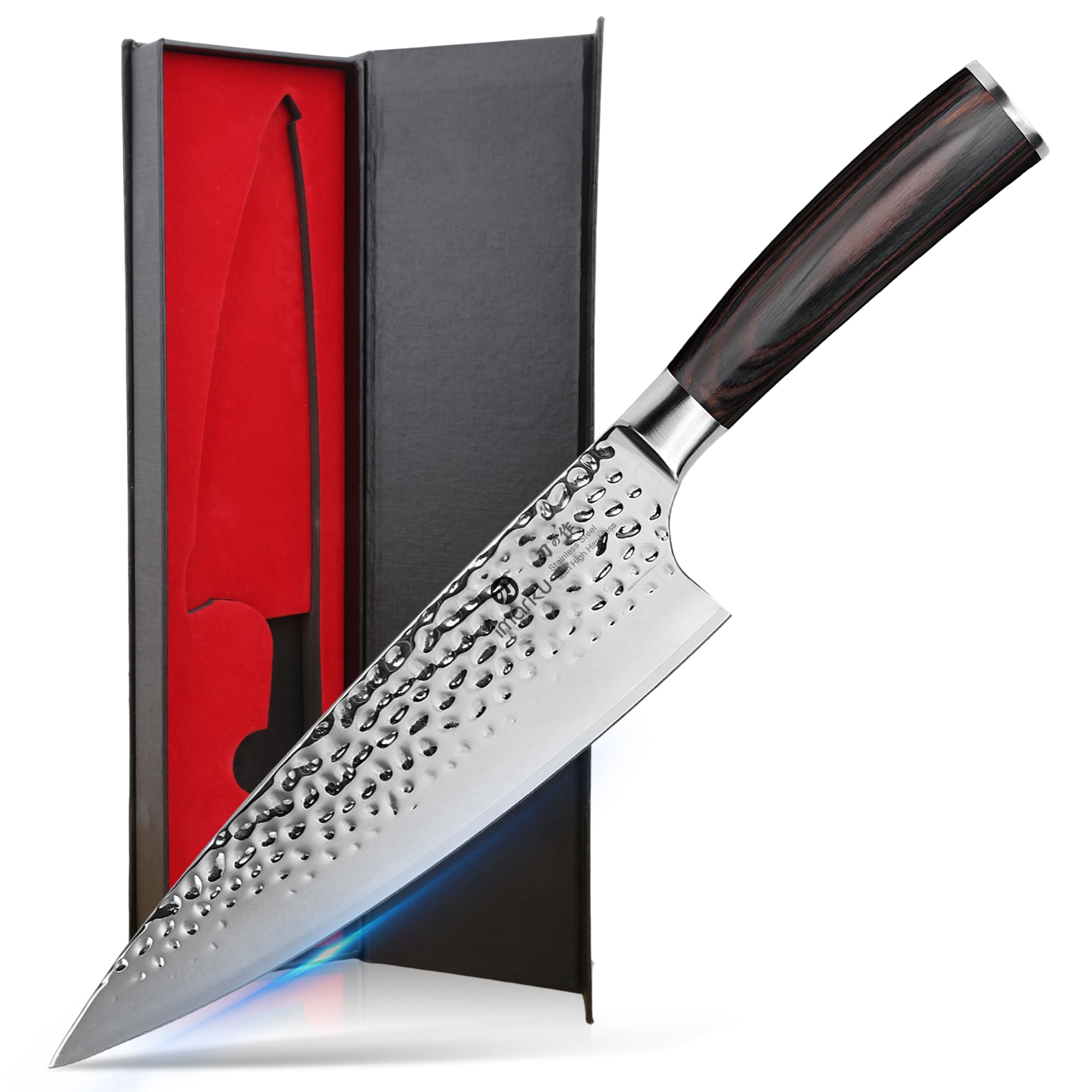
- 8-inch chef knife with hammered finish and powder steel edge.
- Hand-sharpened V-shaped edge at 13 degrees per side.
- 2.3mm blade with a Pakkawood handle.
Best For: Cooks interested in an 8-inch hammered knife with a Pakkawood handle and powder steel edge.
Sunnecko 8-Inch Damascus VG10 Chef Knife
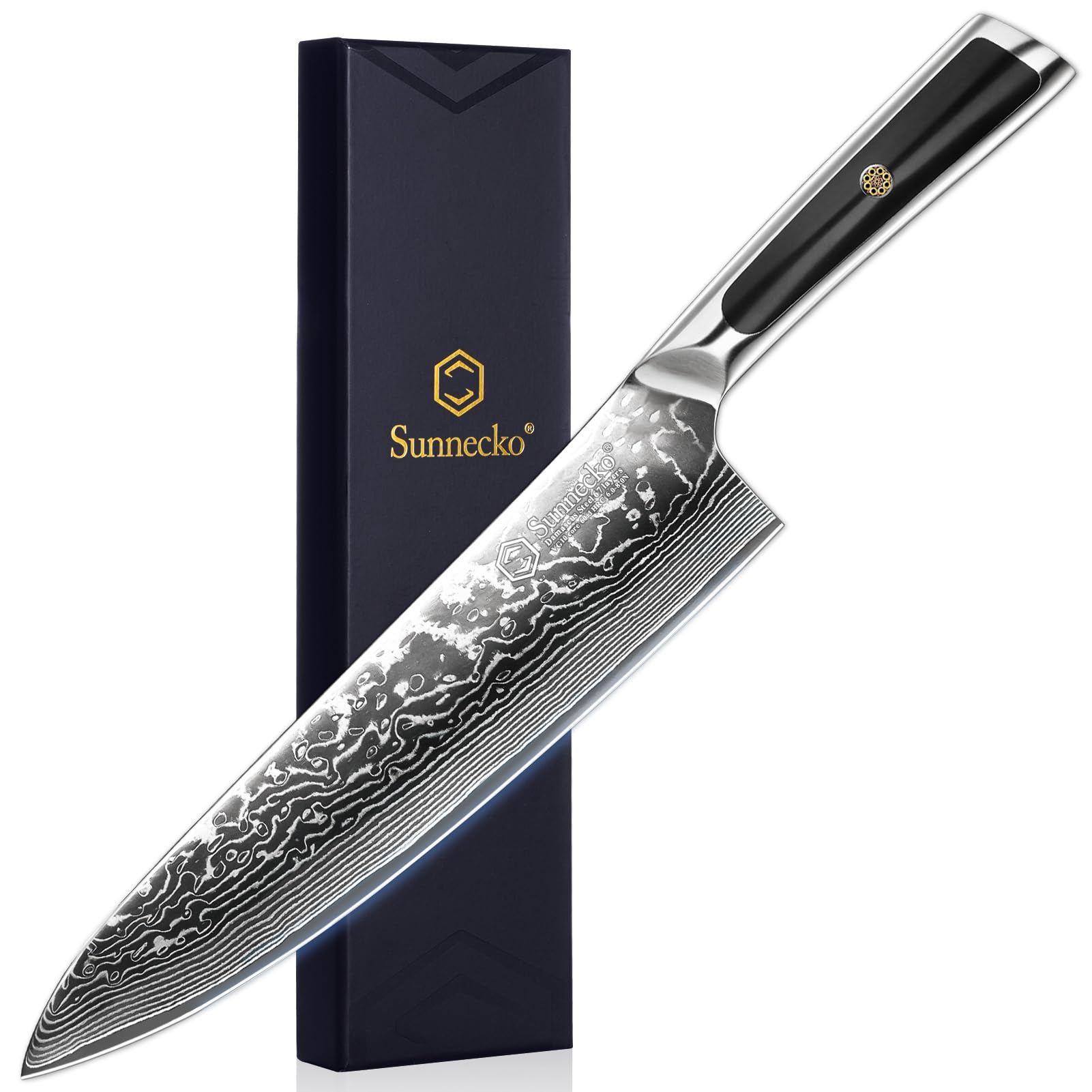
- 8-inch chef knife with a VG10 core and 67-layer Damascus steel.
- Hand-honed 10–12 degree edge.
- Full-tang construction with an ergonomic ABS handle.
Best For: Cooks seeking a Damascus-pattern 8-inch knife with a VG10 core and full-tang construction.
imarku 8-Inch Single-Bevel Chef Knife
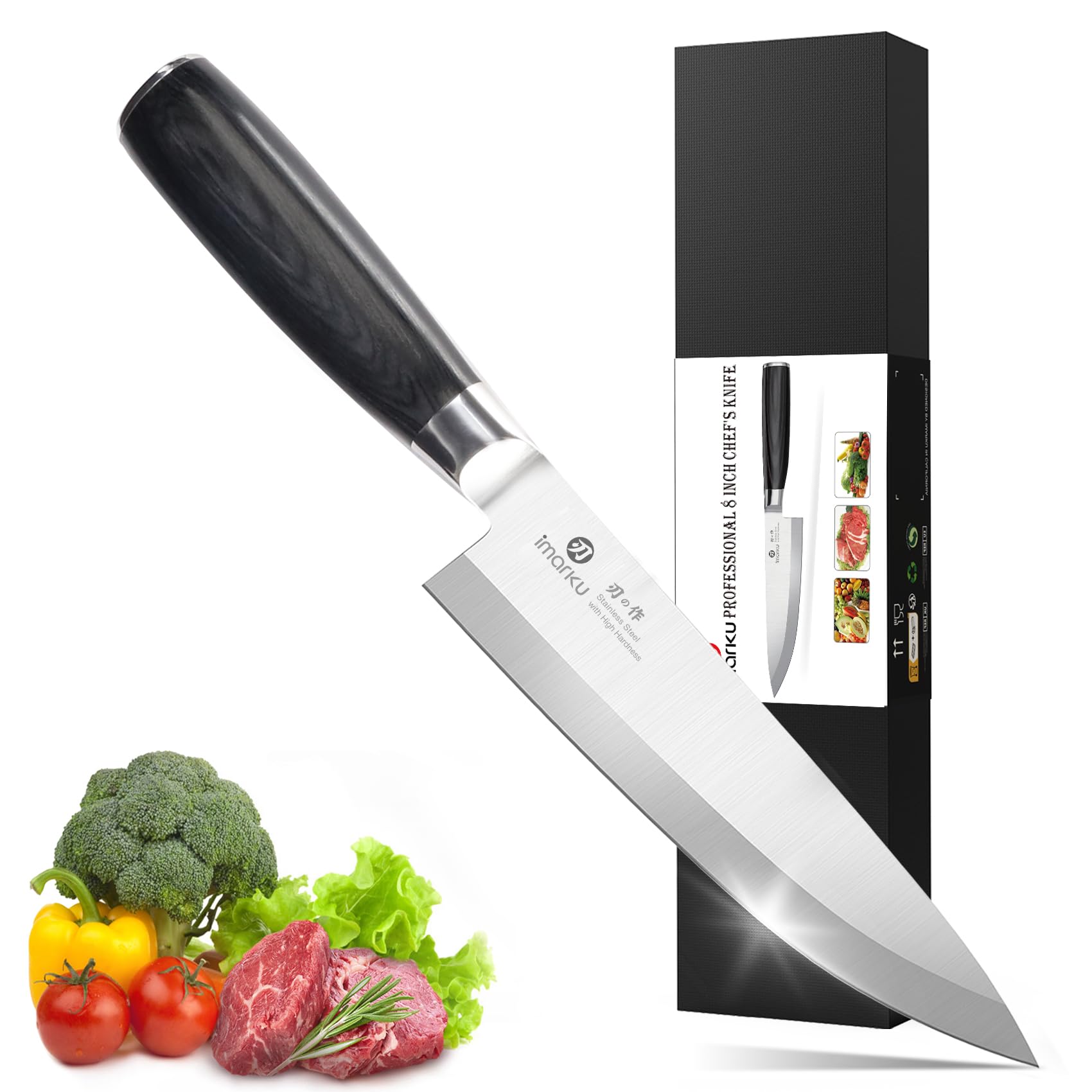
- Single-bevel blade designed for right-handed users.
- High-carbon stainless steel with 56–58 HRC hardness.
- Pakkawood handle with a non-slip design.
Best For: Right-handed cooks who want a single-bevel edge and make precise cuts on small to medium fish.
SYOKAMI 7-Inch Cleaver Chef Knife
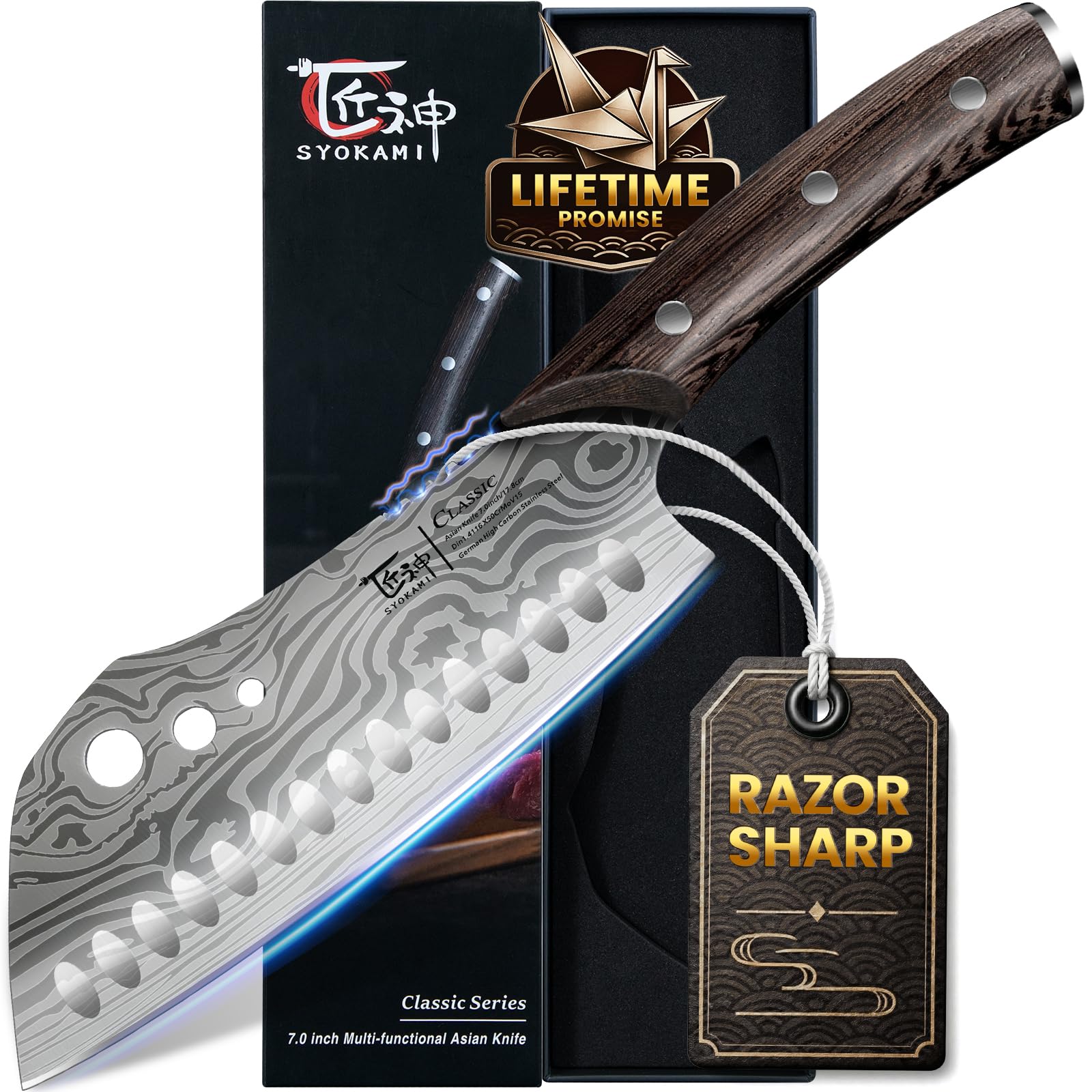
- 7-inch Asian knife combining chef’s knife, Santoku, and Nakiri features.
- Three-hole herb stripper helps remove leaves from stems.
- Full-tang German steel blade with a 14–16 degree edge.
Best For: Cooks who often prepare leafy herbs and want a compact Asian-style all-purpose blade.
Messermeister Oliva Elite Stealth 9-Inch
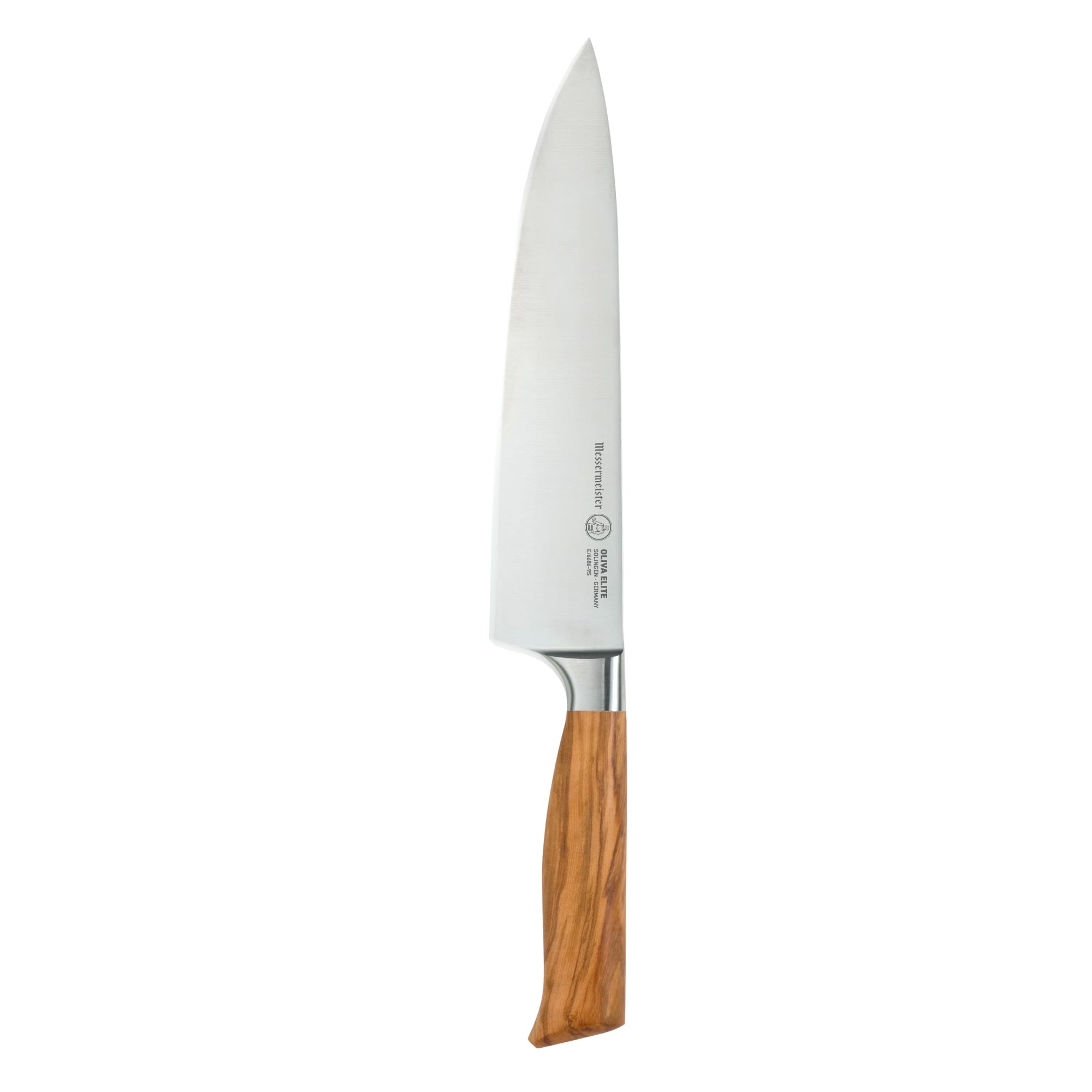
- 9-inch chef knife with German steel alloy blade and olive wood handle.
- Fine 15-degree edge for broad kitchen prep.
- About 25% thinner and 10% lighter than the traditional chef’s knife.
Best For: Cooks who prefer a longer blade and an olive wood handle for broad slicing and prep.
Lightweight, Food-Shedding 8-Inch Pick
imarku Japanese Chef Knife 8 Inch, Sharp Kitchen Knife in Japanese HC Steel
This 8-inch imarku has a triple-layer clad construction and a double-bevel edge, with a pakkawood handle and an overall weight of 210g. The sandblasted matte finish is designed to reduce friction so ingredients such as potatoes, fish, cheese, and onions slide off more readily.
Its curved blade suits slicing, dicing, mincing, and chopping boneless meats and vegetables. It is a practical fit for everyday meal prep, especially for cooks who find heavier knives tiring.
The maker specifically cautions against using it on bones, frozen food, or hard squash rinds, and recommends hand washing.
Best For: Home cooks who want a lighter all-purpose knife and a matte blade finish.
| Pros | Cons |
|---|---|
|
|
Choose this imarku if low weight and a food-shedding finish matter more than a knife meant for every tough ingredient. Its stated use is broad for vegetables and boneless meats, but the bone, frozen-food, and hard-rind cautions set a clear boundary.
The product details do not identify a protective sheath, so check storage options if it will live in a drawer or travel outside the kitchen.
Traditional German Knife With a Heavier Feel
Messermeister Meridian Elite 8” Traditional Chef’s Knife - Fine German Steel Alloy Blade - Rust Resistant & Easy to Maintain
The Meridian Elite combines a hot-drop forged, one-piece blade, bolster, and tang with a triple-rivet POM handle. Its German 1.4116 steel alloy has a 15-degree edge, and the listing highlights rust resistance and straightforward maintenance.
The knife is described as heavy, with balance in the handle, a feel some cooks may prefer when moving through meat and vegetables. A bolsterless heel also lets the usable edge extend through cutting and makes sharpening and honing easier to work across.
This is a traditional all-purpose profile for cooks who value a substantial feel over a lightweight design.
Best For: Cooks who prefer a heavier, forged German-style knife for regular chopping and slicing.
| Pros | Cons |
|---|---|
|
|
This is the pick for someone who wants a traditional, heavier knife and values a bolsterless heel for maintenance. Its 8-inch blade suits varied fruit, vegetable, meat, and fish prep, while the weight is a meaningful preference to check in person if possible.
Compare its POM handle and substantial feel with lighter options before choosing; this product record does not provide a weight figure.
Damascus Knife With a Standing Sheath
8 Inch Damascus Chef Knife, Japanese Kitchen Knife with VG10 Steel
This 8-inch forged knife combines a VG10 core with 67-layer Damascus steel and a hammered finish. It has a 10-degree edge and a full-tang pakkawood handle reinforced with triple rivets.
The included ash wood sheath covers the blade and can stand upright on a countertop, a useful detail for display and storage. The knife is presented as a versatile kiritsuke-style option for vegetables, fruit, meat, and fish.
Its edge geometry and Damascus construction make it distinctive, while the maker's notes do not specify a care routine, so check care guidance before purchase.
Best For: Cooks who want a Damascus-pattern blade and a sheath that stands upright for storage.
| Pros | Cons |
|---|---|
|
|
Consider this knife if the standing sheath solves a real storage or display need and the layered blade appeals to you. It combines an 8-inch profile with a kiritsuke form, so look closely at the blade shape and confirm it matches your preferred cutting motion.
Care guidance is not given in these details; ask about cleaning and sharpening before relying on it as a daily-use knife.
Slimmer Olive-Wood 8-Inch Option
Messermeister Oliva Elite Stealth 8” Chef’s Knife - Fine German Steel Alloy Blade & Natural Mediterranean Olive Wood Handle - Rust Resistant & Easy to Maintain
The Oliva Elite Stealth uses German 1.4116 steel with a fine 15-degree edge and a natural Mediterranean olive wood handle. Its blade, bolster, and tang are forged as one piece in Solingen, Germany.
The maker describes this version as about 25% thinner and 10% lighter than its traditional chef’s knife, while retaining a full-size 8-inch blade for everyday fruit, vegetable, meat, and fish prep. A bolsterless heel makes it easier to use the edge from heel to tip and simplifies honing.
Choose it for a slimmer feel and olive wood, while checking care guidance for the natural handle.
Best For: Cooks who want an 8-inch German-steel knife with an olive wood handle and a thinner profile.
| Pros | Cons |
|---|---|
|
|
Pick the Oliva Elite Stealth if you want an 8-inch knife with a thinner, lighter profile and an olive wood handle. Its 15-degree edge and broad ingredient range suit general prep, while the bolsterless heel offers practical access for honing.
The record gives relative weight and thickness, but no actual weight or handle-care directions. Confirm those details if you are replacing a knife with a known heft or routine.
Hammered Blade With Powder Steel Edge
imarku 8 Inch Chef Knife, Hand-Hammered Japanese Kitchen Knife, High Carbon Steel Chef's Knife with Powder Steel Edge, Ultra Sharp Cooking Knife with Ergonomic Handle for Professional & Home Chefs
This imarku has an 8-inch blade with a hand-hammered finish and a powder steel edge. Its V-shaped edge is hand-sharpened to 13 degrees per side, and the blade is 2.3mm thick.
The Pakkawood handle is shaped for an ergonomic grip and is described as suitable for left- and right-handed users. The knife is intended for slicing, dicing, and chopping vegetables, fruit, and meats.
The hammered surface is designed to reduce food adhesion. Consider it if those specific details appeal, and verify care instructions before purchase because the available notes do not specify a cleaning method.
Best For: Cooks interested in an 8-inch hammered knife with a Pakkawood handle and powder steel edge.
| Pros | Cons |
|---|---|
|
|
This imarku suits cooks who want the hammered appearance, a 13-degree edge, and an ergonomic Pakkawood handle in an 8-inch format. Its listed tasks are standard home prep, with no specialized profile or storage piece identified.
Before buying, confirm how the blade should be cleaned and where it will be stored; the product details provided here do not specify either point.
67-Layer Damascus With Full-Tang Balance
Sunnecko 8 Inch Japanese Damascus Chef Knife - Ultra Sharp VG10 Steel | 10-12 Degree Edge 67 Layers Kitchen Cooking Knives for Meat, Vegetable & Fruit, Full Tang, Camping & BBQ Gifts for Men
Sunnecko pairs a VG10 core with 67 layers of high-carbon stainless steel and an 8-inch blade. It has a hand-honed 10–12 degree edge and full-tang construction, with an ABS handle shaped for a secure grip.
The stated uses cover everyday slicing, dicing, and chopping, as well as more detailed fish and meat preparation. It is also positioned for outdoor cooking, though the details do not identify a sheath or storage case.
For a home cook, the main draw is the combination of the Damascus appearance, stated edge angle, and full-tang handle; check care and storage needs before deciding.
Best For: Cooks seeking a Damascus-pattern 8-inch knife with a VG10 core and full-tang construction.
| Pros | Cons |
|---|---|
|
|
Choose Sunnecko if the combination of VG10 core, Damascus layers, and full-tang balance matches your preferences. Its notes cover varied kitchen prep and outdoor cooking, but do not identify a protective cover, which matters if you plan to transport it.
Confirm storage and care details, and compare the ABS handle with wood-handle alternatives if material and grip are priorities.
Right-Handed Single-Bevel Profile
imarku Chef Knife 8-Inch Pro Japanese Kitchen Knife High-Carbon Stainless Steel Paring Knife Ergonomic Handle Rasor Sharp Single-Bevel Edge Gift for Men
This imarku is an 8-inch chef knife with a single-bevel blade, designed specifically for right-handed users. The high-carbon stainless steel has a stated hardness of 56–58 HRC, and the Pakkawood handle is shaped for a non-slip grip.
Its notes describe a 13-degree edge and mention fish preparation, including removing scales and ribs from small to medium fish. That makes it a more specialized option than a conventional double-bevel all-purpose knife.
If you usually share knives with left-handed cooks, factor in the handed design; also follow the care advice to avoid dishwashers and soaking.
Best For: Right-handed cooks who want a single-bevel edge and make precise cuts on small to medium fish.
| Pros | Cons |
|---|---|
|
|
This is a niche fit for a right-handed cook interested in a single-bevel edge, especially for small to medium fish work. The handedness is the key tradeoff; a shared household with left-handed cooks may prefer a double-bevel option.
It can cover general chopping and slicing too, but compare its specialized geometry with your usual technique. Keep its hand-wash and no-soaking guidance in mind.
Herb-Stripping Asian Chef Knife
SYOKAMI Cleaver Chef Knife with Herb Stripper, 7" Asian Kitchen Knife 3-in-1 Combined with Chef's Knife, Santoku, Nakiri for Slicing, Chopping, Dicing, Mincing, Housewarming Birthday Cooking Gifts
The SYOKAMI is a 7-inch Asian chef knife that combines features associated with Chinese chef’s, Santoku, and Nakiri knives. Three holes in the blade can strip leaves from herb stems, adding a specific prep function beyond chopping and slicing.
The full-tang German steel blade has hand-polished edges at 14–16 degrees per side and a stated hardness of 56+ Rockwell. Its wenge wood handle includes a gear-tooth grip element intended to help maintain hold when wet.
It is a compact alternative to a conventional chef knife, with an extra task-specific feature for cooks who use fresh herbs often.
Best For: Cooks who often prepare leafy herbs and want a compact Asian-style all-purpose blade.
| Pros | Cons |
|---|---|
|
|
The SYOKAMI makes sense if herb prep is frequent and the three-hole stripper would replace a separate step. Its 7-inch length is compact, and its combined style is distinct from a conventional chef knife.
Check the blade shape and your preferred grip before buying, and confirm storage and care details because no sheath or maintenance routine is identified.
Long 9-Inch German Steel Blade
Messermeister Oliva Elite Stealth 9” Chef’s Knife - Fine German Steel Alloy Blade & Natural Mediterranean Olive Wood Handle - Rust Resistant
This 9-inch Oliva Elite Stealth uses German 1.4116 steel, a fine 15-degree edge, and a Mediterranean olive wood handle. Its blade, bolster, and tang are one-piece hot-drop forged in Solingen, Germany.
The Stealth version is described as about 25% thinner and 10% lighter than the traditional chef’s knife, with a bolsterless heel that makes the full edge accessible for cutting, sharpening, and honing. The extra length may suit cooks who often work with larger ingredients or want a longer slicing stroke, but it can feel less manageable on a small board.
Consider your workspace and grip before choosing this profile.
Best For: Cooks who prefer a longer blade and an olive wood handle for broad slicing and prep.
| Pros | Cons |
|---|---|
|
|
Consider this version if you want a longer 9-inch edge and an olive wood handle. The thinner, lighter design may temper the larger blade’s feel, but its longer format means board space and control are worth checking.
Its 15-degree edge and bolsterless heel suit broad prep and maintenance access. Verify the actual weight and handle-care routine if those details will affect daily use.
How to Choose Chef Knives
How We Picked Chef Knives
This selection focuses on standalone knives suited to home-cooking prep, with a preference for recognizable all-purpose chef profiles and products that identify the blade length, edge style, or handle materials. The picks span lighter and heavier designs, German and Japanese-style steel descriptions, a hammered blade, a Damascus construction, and a compact herb-prep option.
Duplicate color variants, accessories, and multiple sizes from the same model family were left out so the choices represent meaningfully different uses.
The keyword covers a broad category, so a useful shortlist should distinguish how the knife fits a cook’s habits. A cook who chops vegetables every day may value balance and handle comfort.
Someone who often prepares fish may prefer a specific edge style, while cooks with limited storage may want a protective sheath or a shorter blade. The details available for each product guided those distinctions.
Comparing Chef Knives
The biggest differences are blade length, geometry, weight, and storage. The 8-inch knives form the familiar all-purpose group: imarku’s 210g model prioritizes a lighter feel, Messermeister’s Meridian Elite is described as heavier, and the Oliva Elite Stealth has a thinner profile with an olive wood handle.
The 9-inch Oliva Elite Stealth adds reach, though cooks should consider their board space and preferred control.
Edge and blade styles narrow the choice further. The right-handed imarku uses a single bevel, while the SYOKAMI is a 7-inch Asian-style knife with an herb stripper.
The Damascus options pair layered construction with a distinctive finish; one includes a freestanding wooden sheath. Compare the handle, edge angle, and intended ingredients rather than choosing by steel name or appearance alone.
| Product | Standout features | Best for |
|---|---|---|
| imarku Japanese Chef Knife 8 InchCheck Price |
| Home cooks who want a lighter all-purpose knife and a matte blade finish. |
| Messermeister Meridian Elite 8-Inch Chef’s KnifeCheck Price |
| Cooks who prefer a heavier, forged German-style knife for regular chopping and slicing. |
| 8-Inch Damascus Chef Knife With VG10 SteelCheck Price |
| Cooks who want a Damascus-pattern blade and a sheath that stands upright for storage. |
| Messermeister Oliva Elite Stealth 8-InchCheck Price |
| Cooks who want an 8-inch German-steel knife with an olive wood handle and a thinner profile. |
| imarku 8-Inch Hammered Japanese Chef KnifeCheck Price |
| Cooks interested in an 8-inch hammered knife with a Pakkawood handle and powder steel edge. |
| Sunnecko 8-Inch Damascus VG10 Chef KnifeCheck Price |
| Cooks seeking a Damascus-pattern 8-inch knife with a VG10 core and full-tang construction. |
| imarku 8-Inch Single-Bevel Chef KnifeCheck Price |
| Right-handed cooks who want a single-bevel edge and make precise cuts on small to medium fish. |
| SYOKAMI 7-Inch Cleaver Chef KnifeCheck Price |
| Cooks who often prepare leafy herbs and want a compact Asian-style all-purpose blade. |
| Messermeister Oliva Elite Stealth 9-InchCheck Price |
| Cooks who prefer a longer blade and an olive wood handle for broad slicing and prep. |
Choosing a Chef Knife Length and Edge
An 8-inch chef knife is a versatile starting point for many home kitchens, but a shorter 7-inch option can feel easier to maneuver for cooks who prefer a compact blade. A 9-inch knife offers more edge for long slicing strokes and larger ingredients, while asking for more room on the cutting board.
The actual feel also depends on balance and weight: one selected imarku is listed at 210g, while the Meridian Elite is described as heavy without a specific weight given.
Edge geometry matters when a knife will be shared. The single-bevel imarku is designed for right-handed users, so it may not suit a household with left-handed cooks.
Double-bevel profiles offer a more straightforward fit for mixed-handed use. A narrow edge angle can appeal to cooks seeking precise slicing, but the steel and edge still need appropriate care and periodic sharpening.
Steel, Handles, and Knife Care
Product descriptions use steel names and hardness figures to help distinguish construction, but those details do not replace an assessment of how the handle and blade feel in hand. German 1.4116 appears in Messermeister’s forged knives, while several Japanese-style options name high-carbon stainless steels or a VG10 core.
Compare the whole design: the imarku matte finish is intended to reduce food sticking, and its notes specifically rule out bones, frozen foods, and hard squash rinds.
Handle materials include POM, Pakkawood, ABS, wenge wood, and olive wood. Shape, balance, and hand size affect control, so consider who will use the knife and whether it will be shared.
Care advice also varies: some products recommend hand washing or warn against soaking, while others do not provide a routine. For wood handles or specialty steels, confirm cleaning and storage guidance before purchase.
Who Should Buy Which Chef Knife?
Choose the lightweight imarku if low heft and a matte food-shedding finish fit your daily prep. The Meridian Elite suits cooks who prefer a heavier traditional knife, while the Oliva Elite Stealth pairs German steel with olive wood and a thinner profile.
Pick the longer 9-inch version only if your board space and cutting style favor extra reach.
For distinctive uses, the right-handed single-bevel imarku is the more specialized fish-prep option, and the 7-inch SYOKAMI is worth considering if its herb stripper would be useful. Choose a Damascus knife if you value its layered construction and appearance, with the freestanding sheath model offering a specific storage feature.
Before ordering, check blade geometry, handle comfort, care guidance, and whether the knife includes a safe storage cover.